

Is “Selling America” Fake News?
Published March 4, 2026

Head of Investment and Fixed Income Strategy
Key Takeaways
- Despite “Selling America” concerns tied to geopolitical uncertainty and policy risks, foreign investors increased U.S. Treasury holdings by more than $650 billion in 2025 to a record $9.27 trillion, challenging the narrative of broad-based capital flight.
- While China’s reported Treasury holdings have declined to roughly $684 billion from their 2013 peak, a sharp rise in Belgium’s custodial holdings keeps combined exposure near $1.16 trillion—suggesting repositioning rather than outright divestment.
- With Japan, the U.K., Ireland and Canada all increasing allocations and recent credit-related anxieties sparking a flight-to-quality rally, U.S. Treasuries continue to assert themselves as the safe-haven asset.
In a post-Liberation Day environment, discussion has centered on the concept of “Selling America.” According to an AI definition, this refers to investors reducing exposure to U.S. financial assets due to geopolitical uncertainty and policy concerns under the Trump administration. Prior to the U.S./Israeli strikes on Iran, the dollar had depreciated. Meanwhile, until the recent credit-related anxieties, the U.S. stock market was making new highs. For this blog, I wanted to focus on the bond market side of the equation, and what we have witnessed through the end of 2025 is that foreign investors were still buying U.S. Treasuries (UST).
Each month, the Treasury Department releases its Treasury International Capital (TIC) report. One highlight is the data on major foreign holders of UST securities.
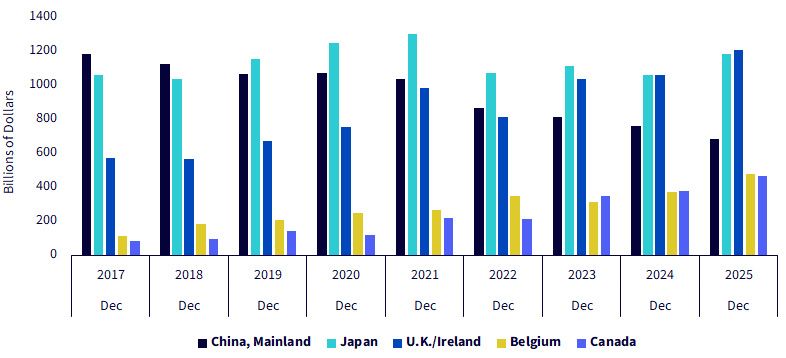
Figure 1: Major Foreign Holders of Treasury Securities
Source: U.S. Treasury Department, as of March 2, 2026.
Country/Regional Breakdown
When analyzing the data from a country/regional perspective, one of the major focuses is on China’s holdings of Treasuries, for obvious reasons. To provide some perspective, China’s peak holdings actually occurred in 2013 at a little over $1.3 trillion and began to more steadily erode after the 2017/2018 period. In fact, by the end of 2025, the figure had been essentially cut in half from the aforementioned peak to about $684 billion.
However, when one is observing China’s holdings, one needs to also consider Belgium holdings of Treasuries. This is due to the fact that Belgium serves as a custodial hub for China’s assets. Interestingly, since the end of 2017, Belgium’s UST holdings have quadrupled to $477 billion by the end of last year, or just shy of the November 2025 record of $481 billion.
Combining the December 2025 tallies for China and Belgium brings the total to $1.16 trillion—little changed from the end of 2017.
Japan, as a singular country, remains in the number one spot at $1.19 trillion, where UST holdings rose by $124 billion last year. From a regional breakdown, the U.K. and Ireland are actually the top holders at more than $1.2 trillion combined, an increase of $145 billion year over year, and more than double the total from the 2017/2018 period.
On a final note, and one that also would seemingly apply directly to a potential ‘selling America’ story, Canada has also bucked the trend, as its UST holdings climbed just shy of $90 billion in 2025. At $468 billion, Canada now sits just behind Belgium and is about 5.5 times higher than in 2017.
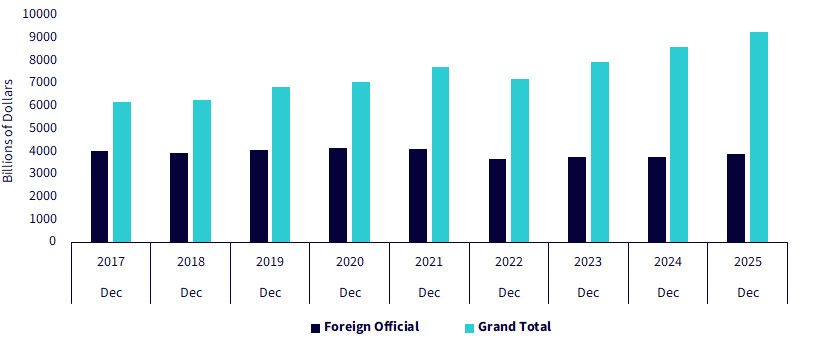
Figure 2: Major Foreign Holders of Treasury Securities
Source: U.S. Treasury Department, as of March 2, 2026.
The Grand Total & Foreign Central Banks
For all of 2025, the grand total of foreign UST holdings registered at $9.27 trillion. This reading not only represented a year over year increase of over $650 billion, but it was also a record amount. Within this ‘grand total’, the TICS data also breaks down the holdings of foreign official institutions, which includes central banks, treasuries/ministry of finance departments and sovereign wealth funds. While the nearly $3.9 trillion figure for year-end 2025 is somewhat lower than where it resided five years ago, it has remained relatively constant since 2017 overall.
Treasury Yields Still the Safe-Haven of Choice
Interestingly, prior to the U.S./Israeli strikes on Iran, the recent credit-related anxieties in the financial markets had put the UST market back on center stage, with yields falling all along the fixed coupon curve due to the flight-to-quality trade. Thus, what global investors had been discovering over the last few weeks is that, despite all of this ‘selling America’ talk, when push comes to shove, U.S. Treasuries are still the safe-haven of choice.
Categories
About the contributor

Head of Investment and Fixed Income Strategy
Kevin serves as the Head of Investment and Fixed Income Strategy. In this role, he writes macro and fixed income-related content and works closely with the sales, research and marketing teams. In addition, Kevin conducts client-facing webinars and meetings, providing expertise on WisdomTree’s existing and future bond ETFs. Prior to joining WisdomTree, Kevin spent 30 years at Morgan Stanley, where he was Managing Director and Chief Fixed Income Strategist for Wealth Management. He was responsible for tactical and strategic recommendations and created asset allocation models for fixed income securities. He was a contributor to the Morgan Stanley Wealth Management Global Investment Committee, primary author of Morgan Stanley Wealth Management’s monthly and weekly fixed income publications, and collaborated with the firm’s Research and Consulting Group Divisions to build ETF and fund manager asset allocation models. Kevin has an MBA from Pace University’s Lubin Graduate School of Business, and a B.S. in Finance from Fairfield University.