

Is Germany Pulling Away from Europe?
Published August 23, 2016

Chief Investment Strategist

Vice President of Strategic Research at Venn by Two Sigma
In a year of so many negative headlines emanating from Europe, it may come as a surprise to some that eurozone stocks, denominated in euros, are virtually unchanged for the year. With investors bracing for a potential recession in France and Italy, equity markets of individual European countries are starting to see some meaningful differentiation. Although Germany continues to work politically to keep Europe unified, its equity market is starting to separate from many other stock markets across the continent. As we can see in the chart below, both the hedged eurozone and Germany indexes separated from their unhedged counterparts toward the end of 2014. This coincided with what was a significant depreciation of the euro beginning in May of that year.
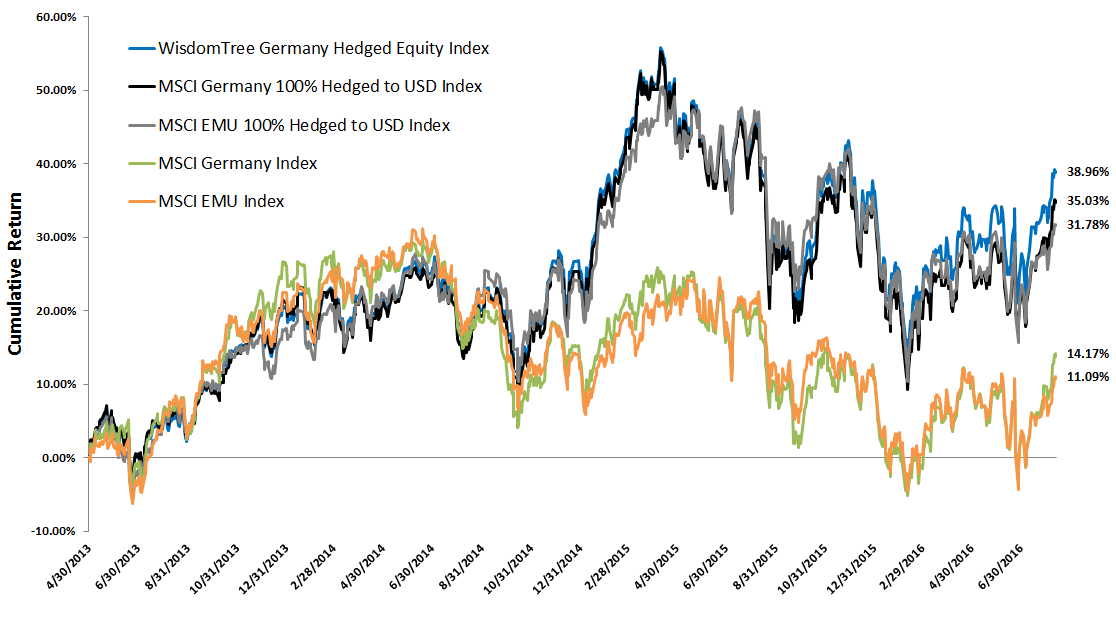
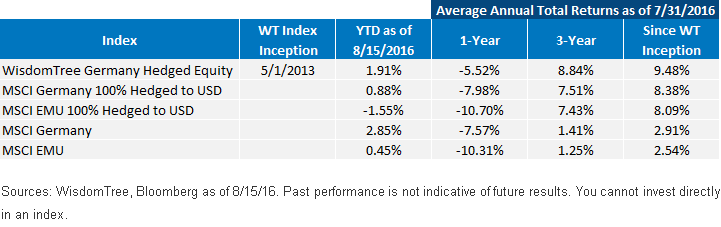
That differential has narrowed in 2016, as the euro has rallied against the dollar. Nevertheless, German stocks continue to outperform the broader European equity market, both on a currency-hedged and unhedged basis over the past year. Over the last decade, the German equity market outperformed Europe as a whole by more than 300 basis points (bps) per year. On a currency-hedged basis, the MSCI Germany 100% Hedged to USD Index outperformed the MSCI EMU Index by 547 bps over that period. As the locomotive of Europe, Germany and its exporters continue to benefit from relatively strong consumer spending in the U.S. and from global gross domestic product (GDP) growth that continues to outpace GDP growth in Europe. To give investors an easy way to track the German equity market in a currency-hedged format, three years ago we launched the WisdomTree Germany Hedged Equity Index. This WisdomTree Index focuses on dividend-paying companies that derive more than 20% of their revenue outside of Germany. Rather than weighting components by market value, WisdomTree rebalances annually, setting company weights based on the dollar value of dividends paid in the prior year. On a currency-hedged basis, the WisdomTree Germany Hedged Equity Index outperformed the broader MSCI EMU 100% Hedged to USD Index by approximately 3.5 percentage points year-to-date through August 15. Over this period, the WisdomTree Germany Hedged Equity Index has also outperformed its comparable cap-weighted index in the category—the MSCI Germany 100% Hedged to USD Index. Much of that excess return has been concentrated in the Financials, Health Care and Industrials sectors. And over the last three years, WisdomTree’s Index has beaten both the hedged and the unhedged versions of the MSCI Germany Index. One might think that such outperformance would now cause the WisdomTree Index to trade at a premium to MSCI Germany or Europe as a whole. However, the WisdomTree Germany Hedged Equity Index currently trades at a discount: 18 times earnings versus 24 times earnings for the MSCI Germany Index and 23 times earnings for the MSCI EMU Index. Conclusion Germany has certainly been a bright spot in the eurozone over the last decade, especially if one hedged the currency. Hedging the euro allows WisdomTree’s Index to mitigate currency risk, while titling toward exporters gives WisdomTree the potential to capitalize on a depreciating euro. Should upcoming elections in Europe cause the euro to weaken, such a hedge could once again represent a source of return for the strategy. For those looking to tilt their Europe exposure toward Germany, the WisdomTree Germany Hedged Equity Fund (DXGE) provides an easy way to implement such a view.
Important Risks Related to this Article
Investments in currency involve additional special risks, such as credit risk and interest rate fluctuations.
Hedging can help returns when a foreign currency depreciates against the U.S. dollar, but can hurt when the foreign currency appreciates against the U.S. dollar.
Foreign investing involves special risks, such as risk of loss from currency fluctuation or political or economic uncertainty.
Categories
About the contributors

