


By Maredith Hannon and Kelly Reddington
Tokenization has become a buzz word in financial services and technology innovation, often coupled with terms like “digital assets”, “digitization”, and “blockchain”. But are these all the same? Specifically for “tokenization” and “digitization” – are these interchangeable? What are key differences between these two terms? In this blog, we’ll detail the important distinctions and impacts of digitized and tokenized assets to clarify their roles in the evolving financial landscape. This distinction between "tokenized assets" and "digitized assets" can help us better understand their unique benefits, trade-offs, and applications in finance and crypto.
What is Digitization?
Digitization is the process of converting physical or analog assets into a digital format. Let’s use eBay, the online marketplace, as an analogy. eBay revolutionized how we experience e-commerce by transforming every conceivable item into a sellable online commodity. This transformation didn't involve tokenizing assets on the blockchain sense but rather digitizing them on the internet.
On eBay, physical products are represented digitally, facilitating e-commerce and digital transactions. This process enables the representation of physical items on the internet, bridging the gap between physical products and digital platforms. Another common example of digitization is the process libraries use to convert older newspapers into PDFs. This involves creating digital copies of physical newspapers, making them accessible and searchable online.
Key Characteristics of Digitized Assets:
- Representation of Traditional Assets: Digitized assets are digital copies or representations of traditional assets. For example, a scanned image of a paper document or an electronic stock certificate.
- Centralized Control: Managed by centralized entities such as online marketplaces, libraries, banks, financial institutions, or companies, operating within existing regulatory frameworks and financial systems.
- Efficiency in Management: Enhances the efficiency of storing, managing, indexing, searching, and transferring assets. Reduces the need for physical storage space and streamlines processes, making it easier to access and manage assets electronically.
- Compatibility: Digitized assets, like PDFs of newspapers or documents, are designed to integrate seamlessly with existing digital systems and platforms. For example, a digitized document can be easily shared, searched, and accessed across various devices and software applications that already support common digital formats.
What is Tokenization?
Now, let's shift our focus to tokenized assets, which is a form of digitized finance, but takes asset digitization a step further by leveraging blockchain technology. Tokenization involves converting rights or title to an asset, or ownership representation of an asset, into a digital token on a blockchain. These tokens can represent ownership or rights over various types of assets, such as real estate, art, traditional investment funds, or commodities like Gold and Silver.
Key Characteristics of Tokenized Assets:
- Blockchain-Based: Utilizes blockchain or distributed ledger technology for creation, transfer, and management. This decentralized approach can enhance transparency and security, while also providing near-instant transaction finality. For example, time-stamped transaction data ensures transparency by recording every transaction on a public ledger.
- Fractional Ownership: Allows an asset to be divided into smaller parts, enabling multiple investors to own fractions of high-value assets. For instance, you could own 1/10th of a house or a painting, or invest smaller amounts in private investments with lower minimums.
- Smart Contracts: Incorporates smart contracts, which are self-executing contracts with the terms of the agreement directly written into code. These automate transactions and enforce terms without the need for intermediaries. For example, a smart contract could execute an if/then statement: if you pay me, then I send you fund shares.
- Increased Liquidity and Access: Can potentially enhances the liquidity of traditionally illiquid assets. By enabling fractional ownership and creating digital marketplaces for trading tokens, tokenized assets can be bought and sold more easily, increasing access for a broader range of investors. For example, tokenizing real estate can turn a typically illiquid asset into one that can be traded more freely on digital platforms.
- Decentralized Control: Operates in a decentralized environment, reducing reliance on intermediaries, counterparties, and potentially lowering transaction costs. For instance, transactions are managed on a peer-to-peer network, removing the need for a central authority to oversee the process.
To clarify the differences between digitization and tokenization, let's consider the WisdomTree Gold Token. Digitization converts physical or analog assets into a digital format, such as scanning a document to create a PDF. In contrast, tokenization, as exemplified by the WisdomTree Gold Token, involves a more complex process. The WisdomTree Gold Token represents a certificate of title to physical gold, minted using either the Ethereum ERC-20 or Stellar SEP-8 token standards. Each gold token corresponds 1:1 to a certificate of title for physical gold, held in a secured external vault with HSBC. The process here includes purchasing gold bars and securing them in the vault, ensuring that the physical gold in the vault is equal to or greater than the gold tokens issued. The use of blockchain technology ensures that ownership records are transparent, secure, and immutable. Additionally, tokenization allows for fractional ownership due to the near infinite divisibility inherent in blockchain systems, which can handle up to 18 decimal places providing the potential for greater granularity in dividing assets. This enables investors to own and trade even small fractions of gold.
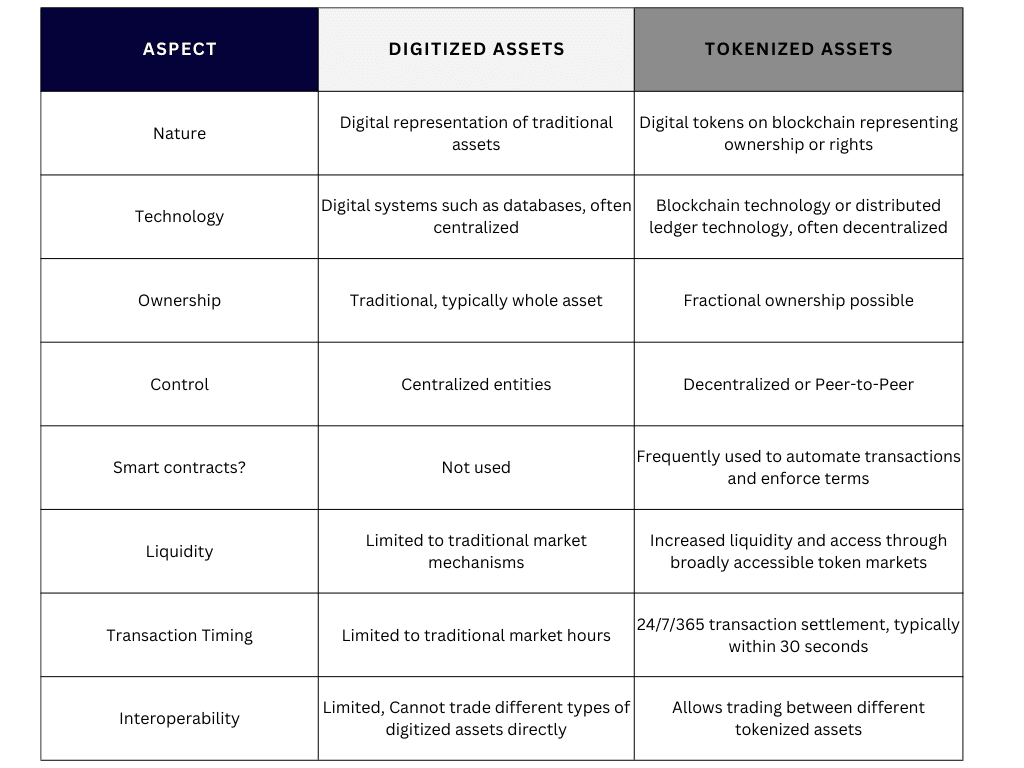
Comparing Digitized and Tokenized Assets
The Value of Tokenized Assets
As we explore the future of tokenization, it's essential to recognize the tangible benefits and potential pitfalls of this technology. Here are a few current or potential benefits of tokenized assets:
- Lower Barrier to Entry: Allows more people to invest in high-value assets by enabling fractional ownership.
- Enhanced Transparency and Security: Blockchain technology ensures transparent and secure transactions.
- Streamlined Processes: Reduces complex processes into a few clicks, making transactions more efficient.
- Reduced Costs: Lowers transaction costs by minimizing the need for intermediaries.
- Smart Contract Utilization: Can potentially automate compliance and enforces terms without manual intervention.
- Interoperability: Among similar tokens, tokenized assets can be traded directly. Unlike digitized assets, where you can’t trade it.
- 24/7/365 Transaction Settlement: Unlike traditional digitized assets that are limited to market hours, tokenized assets can settle transactions around the clock by utilizing blockchain rails that provide continuous accessibility.
Understanding the differences between digitized and tokenized assets is essential as we navigate the transformation of finance. Digitized assets improve efficiency by converting physical assets into digital formats, enabling easier management within traditional financial systems. In contrast, tokenized assets leverage blockchain technology to introduce new paradigms of ownership, liquidity, and decentralization. Tokenization not only digitizes assets but also decentralizes, broadens access, and allows for fractional ownership. This goes beyond mere representation of ownership rights; it enables ownership with transferable value that adds utility. For example, tokenized assets can be spent directly, such as using a gold token to make purchases. This ability to spend from tokenized assets highlights their practical value and utility in the financial system.
Drawbacks of Digitized and Tokenized Assets
While there are significant advantages to both digitized and tokenized assets, it is important to consider the potential drawbacks:
Tokenized Assets:
- Loss of Value: If you send tokens to the wrong address, they potentially cannot be retrieved, leading to potential loss of value.
- Security Risks: The security of blockchain technology relies heavily on the user's and/or tokenized asset issuer’s adherence to good security practices and the robustness of the underlying technology.
- Liquidity: Tokenization does not guarantee that all tokenized assets will be automatically secure or liquid. These benefits depend on the specific blockchain, and the infrastructure supporting the tokenized assets
Digitized Assets:
- Need for Original Copies: For some assets, such as home deeds, the original physical document is still required to prove ownership. A digitized version does not suffice in these cases.
- Centralized Risks: Being managed by centralized entities, digitized assets can be subject to the risks and inefficiencies of these organizations, including security breaches, acts of God such as Hurricanes and Floods, and operational failures.
As the financial landscape continues to evolve, recognizing these distinctions between digitization and tokenization is crucial. Recognizing the unique benefits and potential of each approach, as well as potential drawbacks, allows us to leverage their strengths and have an overall better understanding in building a more inclusive, efficient, and innovative ecosystem that meets the diverse needs of investors and institutions. The future of finance lies in understanding and harnessing the power of these technologies in seeking to create a more transparent, secure, and accessible market for all.
Perspectives in Onchain Finance
View all

About the contributor

Kelly Reddington
Marketing and Research Analyst
Kelly Reddington is a Marketer and Research Analyst at WisdomTree, specializing in digital assets and the evolving financial infrastructure. He plays a key role in product marketing, executive communications, and content strategy for WisdomTree's digital assets initiatives, helping articulate the firm's vision for the future of tokenization and onchain finance. Prior to joining WisdomTree, Kelly built a career at the intersection of cybersecurity, marketing, and blockchain technology. He holds a degree in Business Administration and Marketing from the University at Buffalo. With a passion for crypto, DeFi, and emerging financial technologies, Kelly brings a unique perspective to how these innovations are communicated and understood by both institutional and retail audiences.
Thought Leaders

Alice Liu
Senior Associate, Cryptocurrency Investments, WisdomTree Europe

Andrew Okrongly, CFA
Director, Model Portfolios

Blake Heimann
Associate Director, Quantitative Research

Christopher Gannatti, CFA
Global Head of Research

Chris Ryder
Head of WisdomTree Transfers

Dovile Silenskyte
Director, Digital Assets Research

Jason Guthrie
Director of Capital Markets, WisdomTree Europe

Jeff Weniger, CFA
Head of Equity Strategy

Jeremy J. Siegel
WisdomTree Senior Economist

Jeremy Schwartz, CFA
Global Chief Investment Officer

Kevin Flanagan
Head of Investment and Fixed Income Strategy

Mobeen Tahir
Director, Macroeconomics and Thematic Research

Nitesh Shah
Head of Commodities and Macroeconomic Research, WisdomTree Europe

Pierre Debru
Head of Research, Europe

Rick Harper
Chief Investment Officer, Fixed Income and Model Portfolios

Rohan Ranadive
Chief Risk Officer, WisdomTree Digital Assets

Samuel Rines
Macro Strategist, Model Portfolios

Vinh Tran
Associate Director, Business Development, Digital Assets

Will Peck
Head of WisdomTree Onchain

WisdomTree Onchain
Contributor
Alice Liu
Senior Associate, Cryptocurrency Investments, WisdomTree Europe
Andrew Okrongly, CFA
Director, Model Portfolios
Blake Heimann
Associate Director, Quantitative Research
Christopher Gannatti, CFA
Global Head of Research
Chris Ryder
Head of WisdomTree Transfers
Dovile Silenskyte
Director, Digital Assets Research
Jason Guthrie
Director of Capital Markets, WisdomTree Europe
Jeff Weniger, CFA
Head of Equity Strategy
Jeremy J. Siegel
WisdomTree Senior Economist
Jeremy Schwartz, CFA
Global Chief Investment Officer
Kevin Flanagan
Head of Investment and Fixed Income Strategy
Mobeen Tahir
Director, Macroeconomics and Thematic Research
Nitesh Shah
Head of Commodities and Macroeconomic Research, WisdomTree Europe
Pierre Debru
Head of Research, Europe
Rick Harper
Chief Investment Officer, Fixed Income and Model Portfolios
Rohan Ranadive
Chief Risk Officer, WisdomTree Digital Assets
Samuel Rines
Macro Strategist, Model Portfolios
Vinh Tran
Associate Director, Business Development, Digital Assets
Will Peck
Head of WisdomTree Onchain
WisdomTree Onchain
Contributor
Alice Liu
Senior Associate, Cryptocurrency Investments, WisdomTree Europe
Andrew Okrongly, CFA
Director, Model Portfolios
Blake Heimann
Associate Director, Quantitative Research
Christopher Gannatti, CFA
Global Head of Research
Chris Ryder
Head of WisdomTree Transfers
Dovile Silenskyte
Director, Digital Assets Research
Jason Guthrie
Director of Capital Markets, WisdomTree Europe
Jeff Weniger, CFA
Head of Equity Strategy
Jeremy J. Siegel
WisdomTree Senior Economist
Jeremy Schwartz, CFA
Global Chief Investment Officer
Kevin Flanagan
Head of Investment and Fixed Income Strategy
Mobeen Tahir
Director, Macroeconomics and Thematic Research
Nitesh Shah
Head of Commodities and Macroeconomic Research, WisdomTree Europe
Pierre Debru
Head of Research, Europe
Rick Harper
Chief Investment Officer, Fixed Income and Model Portfolios
Rohan Ranadive
Chief Risk Officer, WisdomTree Digital Assets
Samuel Rines
Macro Strategist, Model Portfolios
Vinh Tran
Associate Director, Business Development, Digital Assets
Will Peck
Head of WisdomTree Onchain
WisdomTree Onchain
Contributor