

Uncovering Value in Emerging Markets
Published December 9, 2015

Director, Research
At WisdomTree, a critical way for us to identify valuation opportunities is through our annual Index rebalance. Our process is designed to evaluate the underlying fundamentals of Index constituents each year. For our dividend Indexes, this translates to reweighting companies in an Index relative to their contribution to the Dividend Stream®—the sum total of all dividends paid within a given Index. We impart a disciplined focus on valuation, typically by: • Increasing weight to firms that are growing their dividends—especially in cases where share price performance has not yet responded • Decreasing weight from firms that see their dividends decrease, especially following runs of strong share price appreciation Looking at current valuations across the world, some of the lowest-priced stocks are found in the emerging markets, and if you screen and weight these securities based on fundamentals, you can improve the valuation characteristics even further. The WisdomTree Emerging Markets High Dividend Index screens by dividend yield and then weights by dividends, typically resulting in a deep value exposure. The Index provides a dividend yield advantage of almost 400 basis points (bps) and is priced 22% lower on a price-to-earnings (P/E) ratio basis, compared to the MSCI Emerging Markets Index. Figures 1 and 2 provide detailed changes in sector and country exposures for the WisdomTree Emerging Markets High Dividend Index. Figure 1: Changes in Country Exposure for WisdomTree Emerging Markets High Dividend Index
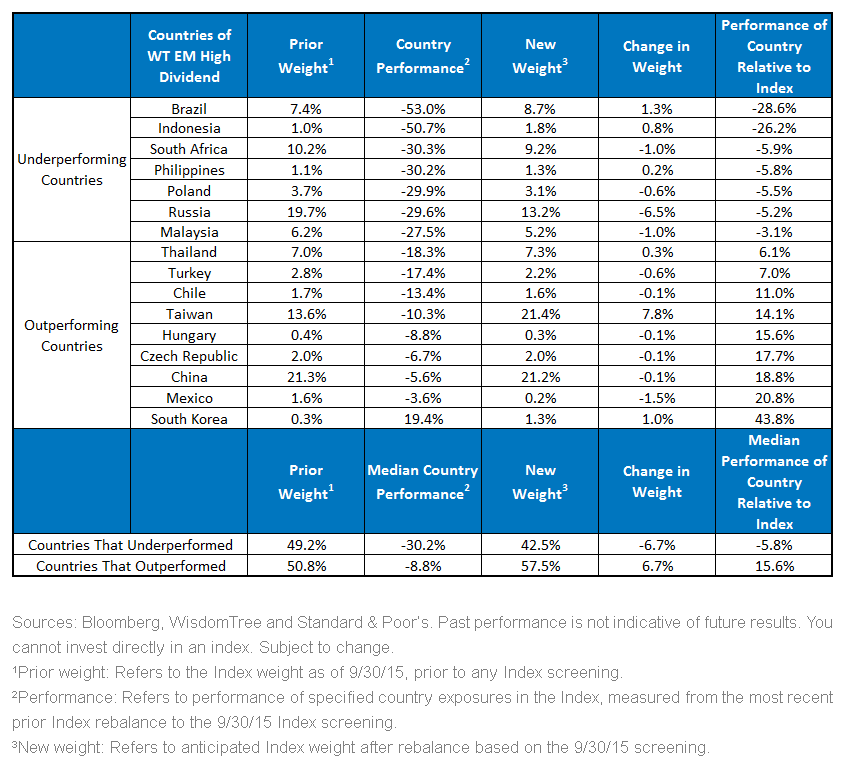
• Country Increases: Typically EM High Dividend’s value-seeking rebalancing process leads to adding weight to countries that underperformed and subtracting weight from countries that outperformed, but dividend growth also plays a role. So although Taiwan exhibited decent relative performance, its relative dividend growth was stronger, ultimately increasing the relationship between dividends and prices, earning a larger weight. Weight was also added to South Korea primarily due to strong dividend growth. More classic examples of where this strategy has typically added weight are Brazil and Indonesia. Both of these countries exhibited poor relative performance and had dividends grow at a higher rate than their price performance. • Country Decreases: Although Russia exhibited poor performance over the period, its dividends contracted even more, decreasing the relationship between dividends and prices, earning a lower weight. Mexico and Malaysia also saw their weights lowered, both resulting from their dividends falling further than their price depreciation. Figure 2: Changes in Sector Exposure for WisdomTree Emerging Markets High Dividend Index
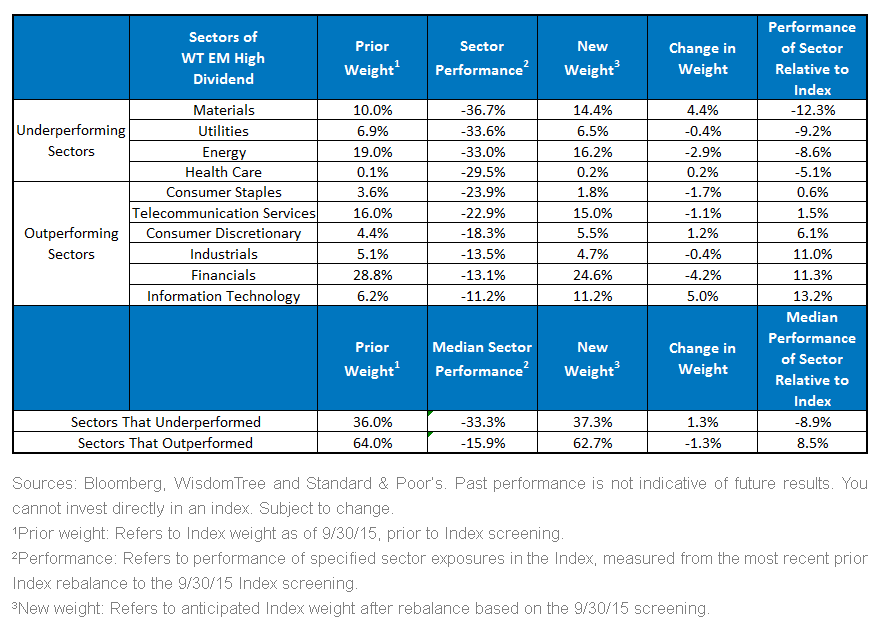
• Sector Increases: Again, typically EM High Dividend’s value-seeking rebalancing process leads to subtracting weight from sectors that outperformed, but dividend growth also plays a role. So although the Information Technology sector displayed the highest relative performance, the sector also displayed the highest dividend growth, receiving a larger weight. Although the Materials sector saw dividends contract over the period, they didn’t fall as much as the price performance, ultimately earning a higher weight because the relationship between dividends and price improved. • Sector Decreases: It is no surprise to us, given the lower oil prices over the past year, that the Energy sector saw a decrease in weight, primarily driven by dividends decreasing. Financials saw the most significant decrease in weight, but the weight reduction is a result of a 25% sector-capping rule. Financials saw positive relative performance over the year, which allowed its weight to drift higher, so bringing it back in line with the capping rule is part of a rules-based, systematic process.
Important Risks Related to this Article
Investments in emerging, offshore or frontier markets are generally less liquid and less efficient than investments in developed markets and are subject to additional risks, such as risks of adverse governmental regulation and intervention or political developments.
Dividends are not guaranteed, and a company currently paying dividends may cease paying dividends at any time.
Categories
About the contributor
