

Generational Lows in Euro Volatility
Published April 30, 2019

Head of Equity Strategy
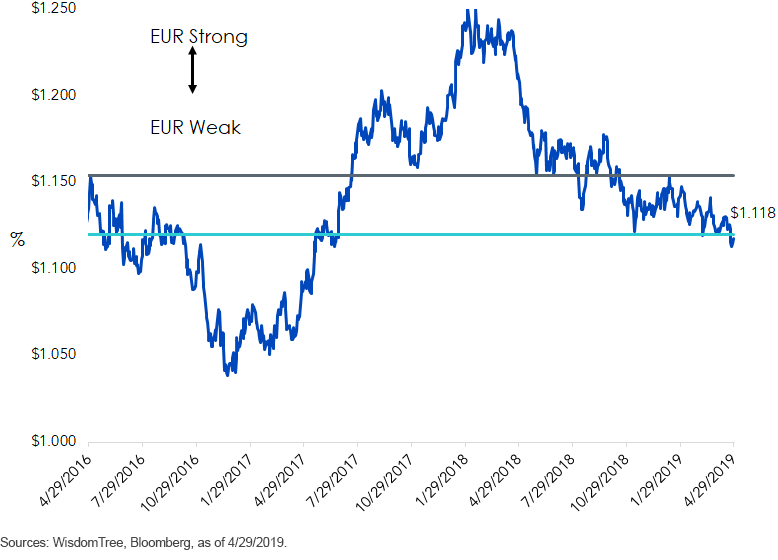
It seems like the euro was pinned between $1.12 and $1.15 for ages. It’s not alone—think of the stubborn pound sterling, which has been unwilling to move up or down, even amid the Brexit telenovela.
Hard to believe, but the S&P 500 surged nearly 26% between Christmas Eve and April 26. In forex, bonds, stocks, you name it—complacency has taken over
Here it is, a possible triple bottom in front-month EUR volatility, put in just a few sessions ago:
Figure 1: Euro 1 Month At The Money Implied Volatility
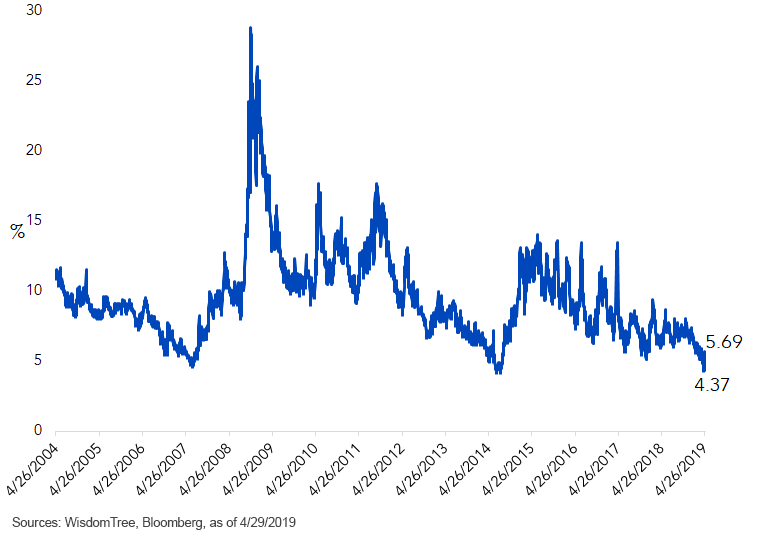
Notice that volatility popped a tad as the bottom of the $1.12 to $1.154 trading range got pierced.
Figure 2: EUR
To be sure, the U.S. dollar isn’t the portrait of health either. The U.S. current account deficit is troubling, and the federal budget deficit is ugly even before Washington rains more spending on health care, student loans and the like.
But EUR is looking at the day-to-day, not the structural issues. I don’t think the main driver right now is this spring’s European parliamentary elections; the market knows that populists are set to make big gains. Recent action also probably has little to do with European Central Bank (ECB) president Mario Draghi being replaced this October, though the Street hasn’t the foggiest idea who will get the nod.
Crude oil, now that’s the driver. We may be on the cusp of $100 barrels being discussed in polite circles. That every-few-years Strait of Hormuz shutdown threat from Iran is again on the table now that the U.S. ended waivers for a half dozen nations that were still buying from the Islamic Republic. China was one of them, and Beijing isn’t happy about the new development. Fraught Sino-U.S. relations did EUR no favors last year.
Finally, keep an eye on the UN’s “International Maritime Organization 2020” environmental regulations. I think it’s a much bigger deal than the market appreciates. If diesel prices rise because of it—and Europeans cars are all about diesel—bring back the gilets jaunes (yellow vest) protests.
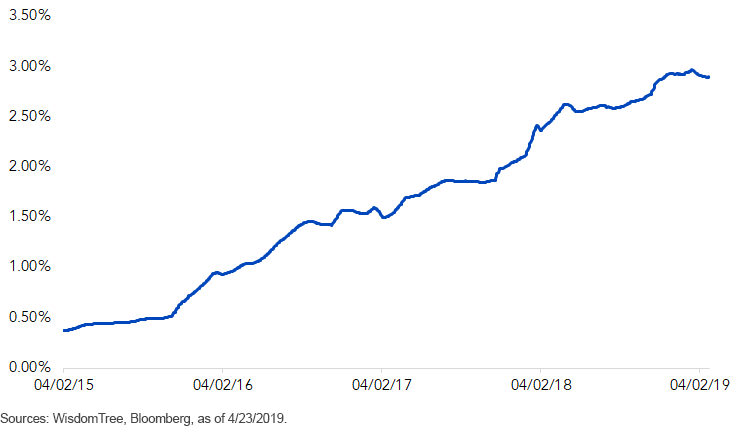
Let’s end with a WisdomTree classic. The carry between EUR and USD short rates has melted higher since the Federal Reserve started tightening policy in December 2015. Getting paid that carry to stem the risk of a volatility and/or oil shock seems logical here.
Figure 3: Euro Hedge Embedded Interest Rate Differential
Unless otherwise stated, all data in this blog from Bloomberg, as of 04/26/2019.
Categories
About the contributor

Head of Equity Strategy
Jeff Weniger, CFA, has been with WisdomTree since 2017 and serves as the Head of Equities. He shapes the firm’s market outlook through a combination of macroeconomic and fundamental analysis. With more than two decades in investment strategy, Jeff is known for his work on market cycles and valuations. Before joining WisdomTree, Jeff was with BMO Private Bank and BMO Global Asset Management for 11 years. At BMO, he sat on the firm’s Asset Allocation Committee and co-managed ETF model portfolios across the U.S. and Canada. In 2013, at age 32, he became the youngest member of BMO’s Global Investment Forum. When he left BMO to come to WisdomTree, his final role was Director, Senior Strategist in the Office of the CIO in 2017.
Jeff is a frequent television guest on networks such as CNBC, Bloomberg, and Schwab, with regular print appearances in The Wall Street Journal, Barron’s and Reuters. He also appears weekly on the Behind the Markets podcast and is a regular on SiriusXM’s The Business Briefing. On X, Jeff has developed one of the larger followings in financial media. He earned a B.S. in Finance from the University of Florida and an MBA from the University of Notre Dame. He has held the CFA charter since 2006.