

It’s OK to “Sell Out”
Published March 24, 2015

Director of Capital Markets
This blog post is relevant to institutional investors interested in trading exchange-traded funds (ETFs) in significant volume. Individual investors do not always have access to liquidity providers to trade ETFs as referenced below. One of the main benefits of the exchange-traded fund (ETF) structure is intraday liquidity. Whether an investor is trading 100 shares in their brokerage account or millions of shares on behalf of an institution, accessing liquidity and obtaining fair execution typically have no bearing on if buying or selling an ETF. An ETF is at least as liquid as its underlying basket, regardless of average daily volume (ADV). Moreover, ETF liquidity providers are in the business of facilitating trade activity to all market participants. That being said, I still hear investors who are skeptical about being able to easily exit their position when it comes time to sell. The notion that liquidity favors buyers over sellers is simply not correct. Two similar trades in the WisdomTree Bloomberg U.S. Dollar Bullish Fund (USDU) provide a great example. In figure 1, we see a large block trade on the buy side of approximately 3.18 million shares on October 28, 2014.
Figure 1
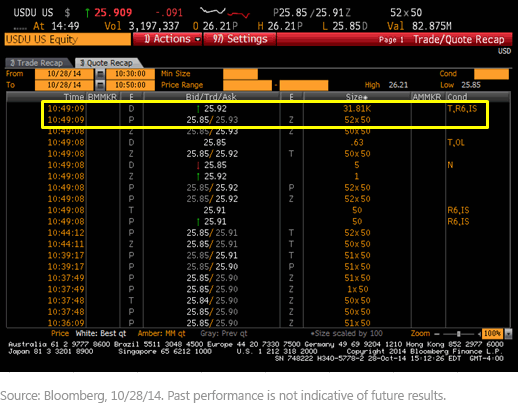
From an execution standpoint, the client was able to buy approx. $82 million worth of USDU, one penny inside the offer, on a spread that was .08 cents wide. The 30-day ADV at the time of the trade was just over 11,000 shares. Fast forward three months, and look at a similar block trade on the sell side. As illustrated in figure 2, on January 26, 2015, a block of 3.13 million shares to sell executed on the bid when the spread of USDU was .03 cents wide. At the time of this trade, the 30-day ADV was 450,000 shares.
Figure 2
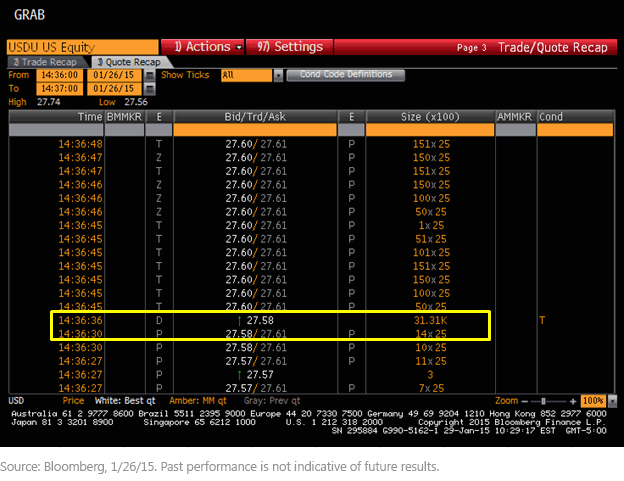
Figure 2 is telling us that a client was able to exit a large trade that was six times the ADV of the Fund without impacting the market. This example is just one of many we see each day of an execution on both the buy and sell sides. Now that we have taken you through an example, here is why it should not matter whether you are a buyer or a seller. Regardless of trade size, the person on the other side of the trade is most likely an ETF liquidity provider.1 A liquidity provider is making a market to both buy and sell a fund at their quoted prices. They do not care whether the client is a buyer or a seller. That’s because a market maker quotes prices based on the fair value of the fund, plus any trading costs and a small profit. Once the ETF is bought from or sold to the client, the market maker will usually look to hedge themselves by taking the other side of the underlying basket, a similar ETF or another highly correlated hedge. The objective is to then unwind the trade through the marketplace or the creation/redemption process with the issuer. In summary, ETF liquidity providers are in the business of facilitating execution to both buyers and sellers. We hope that this example gives confidence to all ETF investors that regardless of whether you are buying or selling, liquidity does not show favoritism when it comes to obtaining good execution.
1The size you are trading determines what method of execution you should choose. Refer to Understanding ETFs: Trading and Valuation for further information on executing in large size.
About the contributor
