
BTCW LN
WisdomTree Physical Bitcoin

Published 17 October 2025

Director, Digital Assets Research
A single macro shock met record leverage in thin liquidity. The result was a historic $19+ billion liquidation cascade, a brief stablecoin wobble, and a cleaner market – not a broken one.
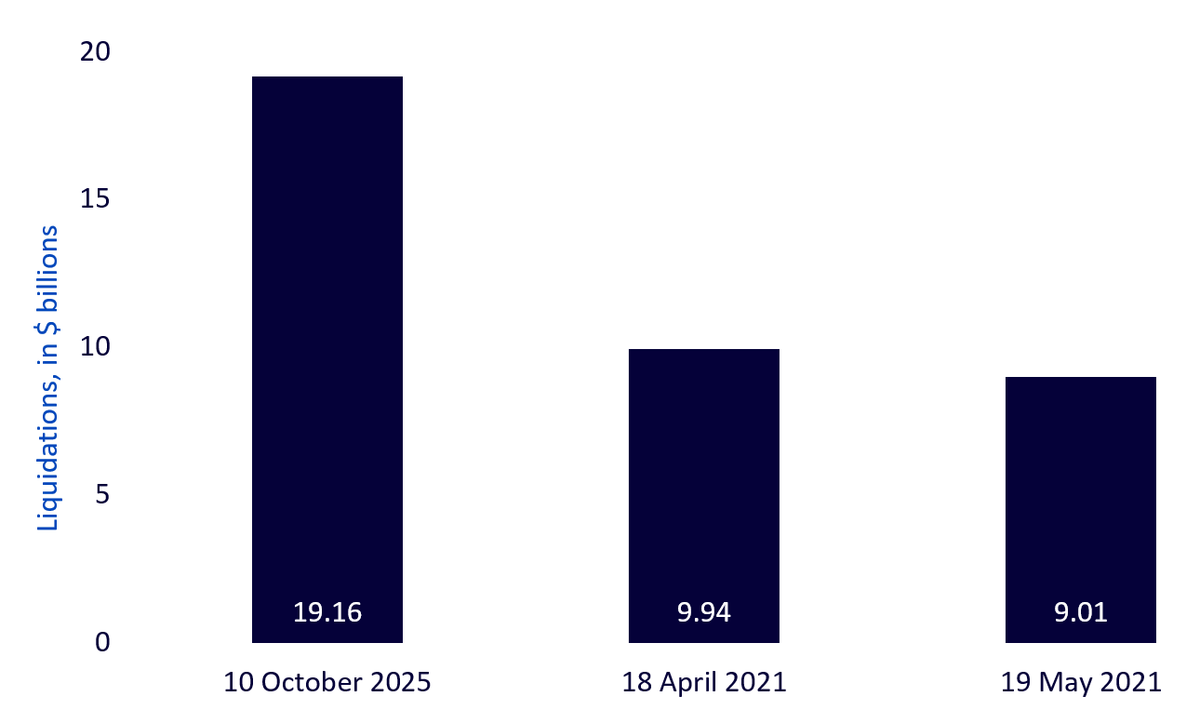
The spark came from a surprise policy announcement when U.S. President Donald Trump unveiled a 100% tariff on Chinese imports and hinted at new export controls on key software.
That headline hit already nervous markets. Risk assets were stretched after weeks of speculation around monetary easing and global “carry trade” positioning.
Unlike traditional markets, crypto trades nonstop – including weekends and nights – so it became the first pressure valve for investors reacting to the news.
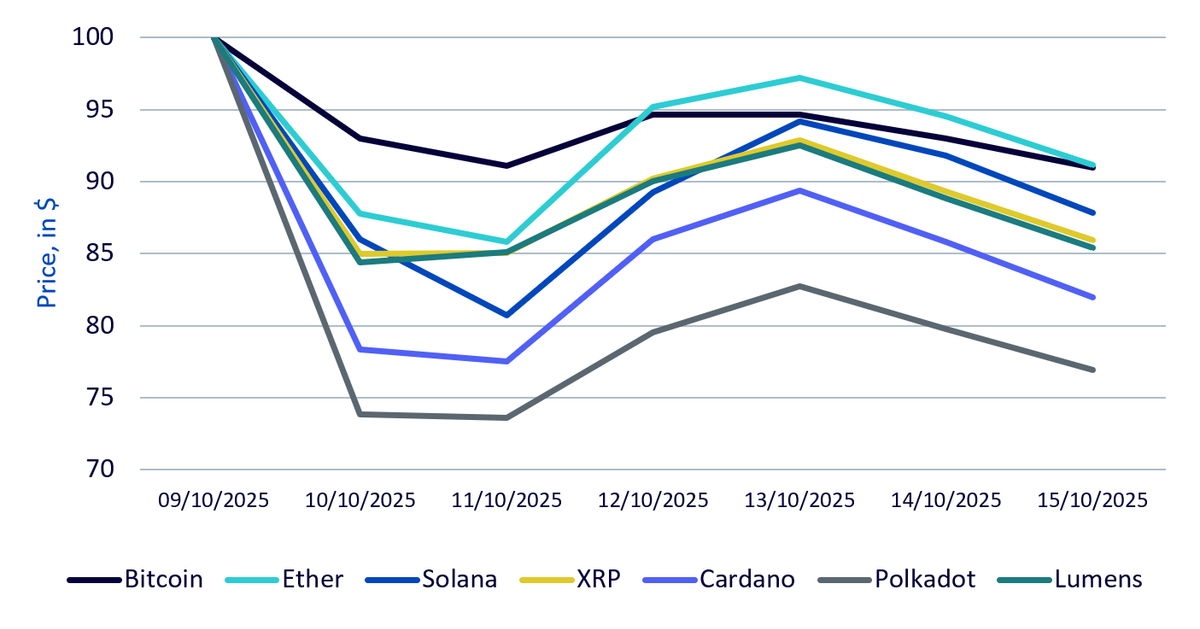
Bitcoin fell, but altcoins – smaller, more volatile tokens – fell even harder.
In the lead-up to the selloff, traders had piled into highly leveraged positions – borrowing heavily to amplify returns. When prices started falling, margin calls triggered a wave of forced selling, known as “liquidations”.

Over 1.6 million traders were wiped out in just 24 hours, and more than $19 billion in leveraged bets were closed .
On some platforms, the damage was extreme. For instance, over 1,000 wallets on Hyperliquid were fully liquidated, with some losses exceeding $1 million .
The shock spread through a web of interconnected exchanges and derivatives platforms. Automated risk systems kicked in, margin thresholds tightened, and liquidation engines sold assets into falling markets – each step accelerating the next.
Liquidity – the ability to buy or sell without moving prices – was in short supply when it was needed most.
As volatility spiked, market makers widened their spreads or paused trading to protect capital. Because crypto liquidity is already thinner than in traditional markets, especially for smaller coins, even modest selling pressure quickly overwhelmed order books.
Some exchanges faced system lags and risk throttles, slowing order processing or triggering automatic “deleveraging” once internal buffers were exhausted.
In altcoins, price drops of over 30% in minutes were common – evidence of how shallow the markets were.
Once the cascade began, liquidity disappeared in a feedback loop: as prices fell, more traders pulled orders, which in turn pushed prices down further.
During the turmoil, a few stablecoins – tokens primarily engineered to mirror the U.S. dollar – briefly wobbled as traders scrambled for safety. Many investors exited riskier coins and rotated into what they considered digital cash stand‑ins like USDT and USDC.
Still, the system largely held. Major stablecoins quickly re‑anchored to their pegs as redemption processes functioned, liquidity shifted across venues, and arbitrage smoothed dislocations. The episode effectively served as a real‑time stress test for the broader “crypto dollar” ecosystem.
The results reaffirmed confidence in fiat‑backed models with transparent reserves, while underscoring that liquidity fragmentation – particularly across decentralised finance (DeFi) pools – remains a key structural weakness during rapid selloffs
The result: a massive reset, not a meltdown
The outcome was one of the largest single-day deleveraging events in crypto history – more than $19 billion in forced liquidations and approximately $400 billion erased from total crypto market capitalization.
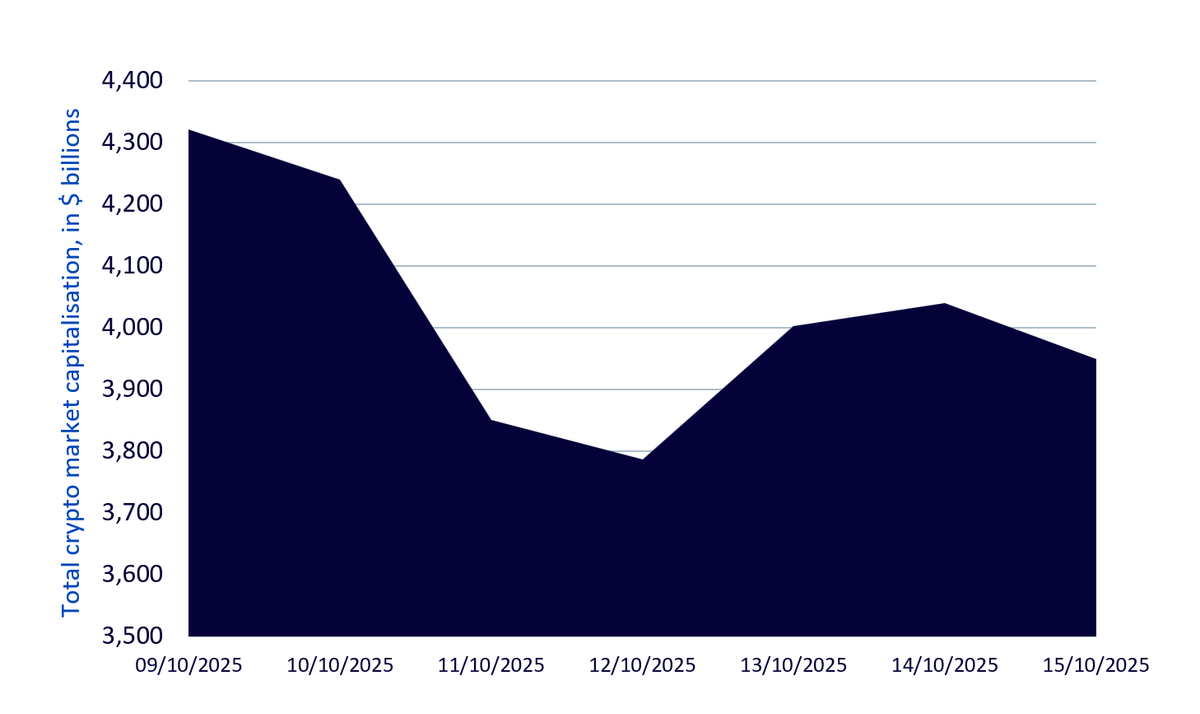
Yet, the market held. Within days, prices rebounded, and trading activity began to normalize. Rather than a systemic failure, this episode looks like a reset – a painful but cleansing purge of excess leverage.
The event exposed how fragile liquidity and leverage structures can amplify volatility, but it also showed resilience. Looking ahead, crypto markets now face a new regime – lower leverage, more cautious sentiment, and sharper sensitivity to macro risks.
While the crash was brutal, it may have left the ecosystem stronger.
WisdomTree Physical Bitcoin

Director, Digital Assets Research
Dovile Silenskyte is a director of digital assets research at WisdomTree. Before joining WisdomTree in May 2024, Dovile worked as an index equity product strategist at BlackRock. Currently, she is responsible for conducting analyses for in-house digital assets publications and assisting the sales team with client queries about products and markets. Dovile holds an MSc in Finance from Texas A&M University – Commerce, and she is also a chartered financial analyst (CFA).

