


Carbon Capture: the missing link for decarbonising the world
Published 26 February 2024

Key Takeaways
- Close to 300 million tonnes of CO2 has already been safely and successfully injected underground.
- The number of CCS projects being proposed or under development is expected to reach over 300 million tonnes per annum by 2030, up from around 45.9 million tonnes in 20221.
- The CCS market, estimated at $3.28 billion in 2022, is projected to grow at a compound annual growth rate of 7.1% to 20302.
- Carbon capture and storage is a vital aid in helping develop a circular economy.
Carbon Capture and Storage (CCS) refers to the process of capturing carbon dioxide (CO2) emissions and storing them safely so that they do not harm the environment. This term encapsulates technologies that capture emissions at the source as well as those that capture CO2 from the atmosphere.
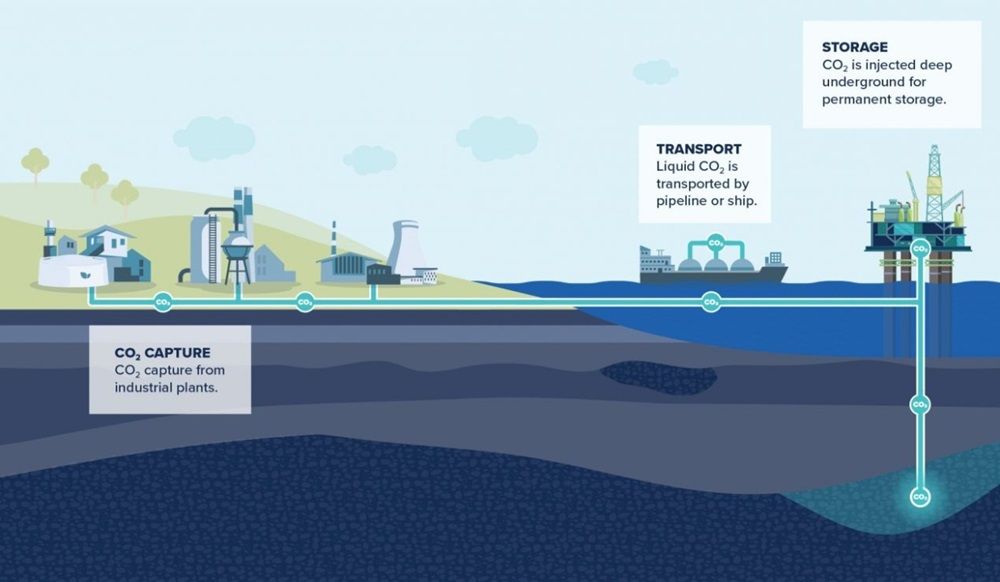
Source: Global CCS Institute, 2024.
According to the CCS Institute, CCS is already happening around the world using a wide range of technologies to capture emissions, depending on their source. The Institute states that there are currently 29 facilities, with a cumulative capacity of around 40 million tonnes per annum – the equivalent of taking nearly eight million cars off the road. Close to 300 million tonnes of CO2 has already been safely and successfully injected underground.
WisdomTree Recycling Decarbonisation UCITS ETF (WRCY)
The WisdomTree Recycling Decarbonisation UCITS ETF (WRCY), built in partnership with experts TortoiseEcofin, is founded on two key pillars. The first pillar is waste to energy, which is the process of generating energy from waste such as household waste, animal manure, agriculture products and/or animal fats. This theme includes companies engaged in the production of renewable fuels, such as sustainable jet fuel, as well as ethanol and other biomass, like wood pellets. The second pillar is recycling. These companies are engaged in recycling business activities including traditional recycling activities like plastic recycling, where plastic is recycled into original materials such as polypropylene for re-use, and lithium-ion battery recycling, as well as companies engaged in carbon capture and sequestration.
WRCY is classified as SFDR Article 93.
The tailwinds for adoption
Firstly, heavy industries that are difficult to decarbonise are embracing carbon capture. Cement manufacturing is one such example. Heidelberg Cement, a global cement manufacturer, is developing eight carbon capture initiatives around the world. Steel manufacturer, ArcelorMittal, has also integrated carbon capture within its multi-billion-dollar investment program. The production of blue hydrogen (made from natural gas and emissions subjected to CCS) also benefits from the technology. Aramco, the world’s largest oil company, is employing this tool to produce sustainable hydrogen4.
Secondly, policy support is also helping with CCS adoption. The Inflation Reduction Act includes tax credits of $85/tonne for CCS projects that reduce emissions from fossil fuels5. In Europe, European Union Allowances (EUAs), which put a price on the emissions of entities regulated within the Emissions Trading Scheme (ETS), are meant to incentivise the adoption of clean technologies. The higher the price of emitting CO2, the more companies will be incentivised to turn towards solutions like renewable energy and CCS.
We know that no single solution can help us fully decarbonise the world. Renewable energy, electrification, recycling, etc must all play a role – and so must carbon capture. Fortunately, the adoption of this technology is on the rise. The number of CCS projects being proposed or under development is expected to reach over 300 million tonnes per annum by 2030, up from around 45.9 million tonnes in 20226. The CCS market, estimated at $3.28 billion in 2022, is projected to grow at a compound annual growth rate of 7.1% to 20307.
Companies at the forefront
As the space develops, business models are also evolving. Aker has established itself as a leading player in the industry offering a carbon capture service as a one-stop solution. Instead of businesses incurring large capital expenditure to reduce or eliminate their emissions, they can employ Aker and pay per tonne of CO2 captured, letting Aker take care of the full value chain of CCS, from capture through to transportation and storage.
NET Power is another player in the industry, which produces energy by combusting natural gas and either injecting the CO2 back into the process for energy generation or capturing and storing it safely. The company claims that its technology captures over 97% of CO2 emissions from power generation.
LanzaTech presents yet another business model while still operating in the same industry. The company takes it a step further by transforming the captured carbon into something valuable and useful at scale. This helps reduce the need for fossil carbon in consumer goods and sustainable aviation fuels.
The circular economy
Carbon capture and storage is a vital aid in helping develop a circular economy. Our traditional model of utilising natural resources has historically been linear: take, make, and dispose. A circular model, in contrast, is one in which we take, make, and recycle. And when recycling is not possible, a circular model aims to minimise the detrimental impact on the environment, like storing carbon safely underground.
Sources
1 International Energy Agency, sourced from World Economic Forum, October 2023.
2 Grand View Research, 2023.
3 Sustainable Finance Disclosure Regulation
4 World Economic Forum, October 2022.
5 US Inflation Reduction Act, reported by the FT November 2023.
6 International Energy Agency, sourced from World Economic Forum, October 2023.
7 Grand View Research, 2023.


About the contributor

Mobeen Tahir
Director, Research
@MobeenTahirWTMobeen is a member of WisdomTree’s research team where he focuses on a wide range of asset classes to offer strategic and tactical insights to our clients on global markets and investment products. Before joining WisdomTree in December 2018, Mobeen worked at Willis Towers Watson as an investment consultant advising institutional clients as well as their in-house fund business on asset allocation and portfolio construction with his research focus being equity and multi-asset smart beta. Mobeen has a BSc (Hons) in Accounting and Financial Management from Loughborough University and an MSc in Accounting and Finance from the London School of Economics and Political Science. He is also a CFA Charterholder.