
WisdomTree
blockchain-6.png

Beyond competition: how blockchain interoperability is shaping the future of digital assets

Published 17 February 2025

Dovile Silenskyte
Dovile Silenskyte

Director, Digital Assets Research

Key Takeaways

  • Related Products WisdomTree Physical Solana, WisdomTree Physical Ethereum Find out more

The battle between Ethereum and Solana has driven rapid innovation, pushing blockchain technology to new heights. However, the true breakthrough lies beyond competition: interoperability.

In today’s multi-chain ecosystem, seamless cross-chain transactions are no longer a luxury but a fundamental requirement for scalability, efficiency, and mainstream adoption. By enabling blockchains to communicate effortlessly, interoperability solutions are unlocking a new era of decentralised finance (DeFi), gaming, and institutional grade blockchain applications.

Why interoperability matters more than ever

Competition has driven innovation, but fragmentation remains a major bottleneck. Investors, developers, and institutions need blockchain networks that work together, not against each other. Here is why interoperability is becoming an essential pillar of the digital asset space:

  • Borderless liquidity: connecting blockchain networks unlocks deeper liquidity pools, reducing inefficiencies in DeFi and trading.
  • Capital efficiency: cross-chain lending, borrowing, and staking ensure that capital is not siloed within a single network.
  • Institutional adoption: regulated DeFi (RDeFi) and tokenised real-world assets (RWAs) require seamless interoperability to scale.
  • Risk mitigation: multi-chain exposure reduces dependency on any single blockchain’s technical or economic risks.

Simply put, the future of crypto is not one blockchain ruling them all. It is an interconnected system of networks working in sync.

Key players driving blockchain interoperability

Several projects are leading the charge in making cross-chain communication a reality. Some of the most impactful include:
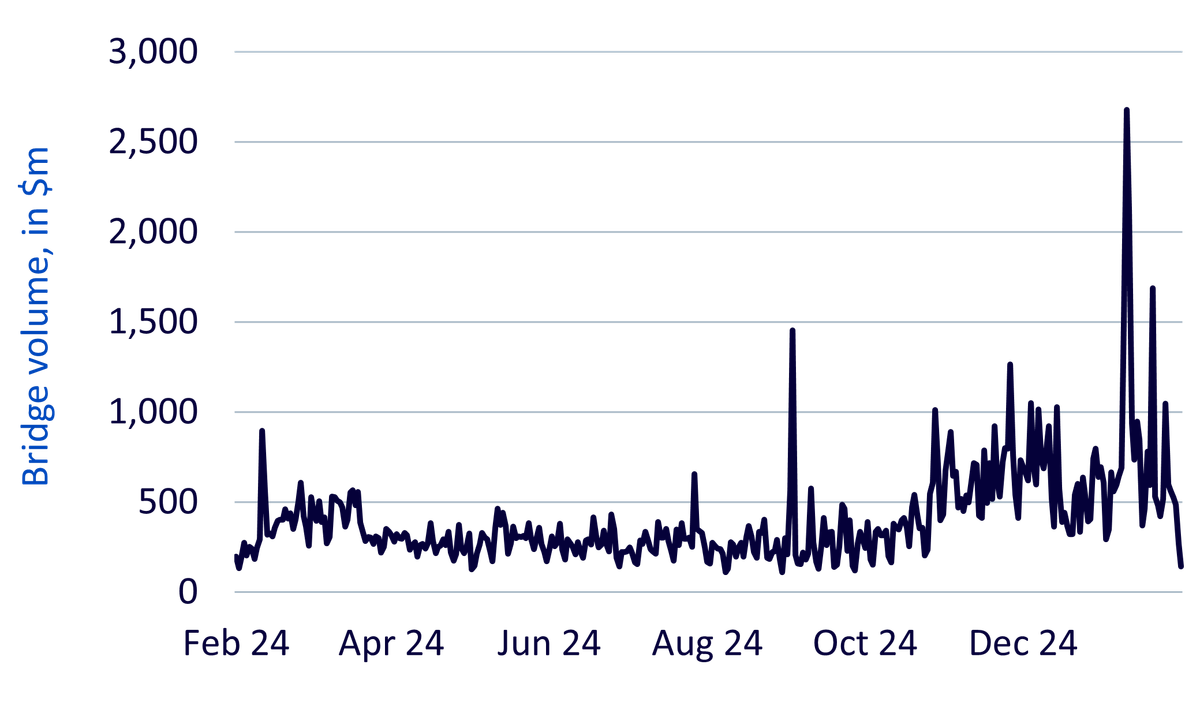
  • Wormhole: one of the most widely adopted cross-chain bridges, facilitating asset transfers across Ethereum, Solana, and beyond. Despite past security breaches, it remains a key infrastructure piece.
  • Allbridge: a multi-chain bridge enhancing liquidity flow across different blockchains, making DeFi more accessible.
  • Neon EVM: a game-changer that allows Ethereum-based applications to run on Solana, combining Ethereum’s ecosystem with Solana’s speed and cost efficiency.

Figure 1: Bridge volume, in USD million

17,-d-,02-crypto-1.png

Source: Artemis Terminal, WisdomTree, 09 February 2025. Historical performance is not an indication of future performance and any investment may go down in value.

However, interoperability does not come without risks. Bridges remain a primary target for hackers, with billions lost due to exploits. Security remains the biggest challenge in achieving truly seamless cross-chain functionality.

Real-world applications: where interoperability is already winning

Interoperability is not just a theoretical upgrade—it is already transforming multiple sectors within crypto, redefining how assets are transferred, traded, and utilised across networks. From enabling seamless DeFi transactions and unlocking new liquidity pools to powering non-fungible token (NFT) marketplaces and institutional financial products, cross-chain functionality is breaking down barriers that once limited blockchain’s potential.

The shift toward interoperability is not only making decentralised ecosystems more efficient but also opening the door to mainstream adoption by addressing scalability, security, and accessibility challenges. This technological evolution is setting the stage for a future where blockchain networks function as an interconnected web, rather than isolated islands.
DeFi 2.0: liquidity without borders

  • Cross-chain lending and borrowing: imagine using Solana-based assets as collateral for Ethereum-native loans.
  • Decentralised exchanges (DEXs): platforms such as Thorchain allow users to trade assets across different chains without centralised intermediaries.
  • Yield farming across networks: users can now optimise yield opportunities across Ethereum Solana, and beyond without manually bridging assets.

NFTs: expanding market reach

  • Cross-chain NFT marketplaces: platforms such as OpenSea and Magic Eden now support multi-chain listings, improving liquidity and accessibility.
  • NFT bridging: Wormhole and other protocols allow NFTs to move seamlessly between blockchains, increasing their utility and market appeal.
  • Gaming and metaverse interoperability: virtual assets are no longer locked into one ecosystem, enabling true cross-platform economies.

Institutional adoption and tokenised assets

  • RDeFi: institutions can now access decentralised applications while maintaining compliance across multiple blockchains.
  • Cross-chain settlements: projects such as Axelar and Chainlink CCIP are facilitating secure institutional-grade transactions.
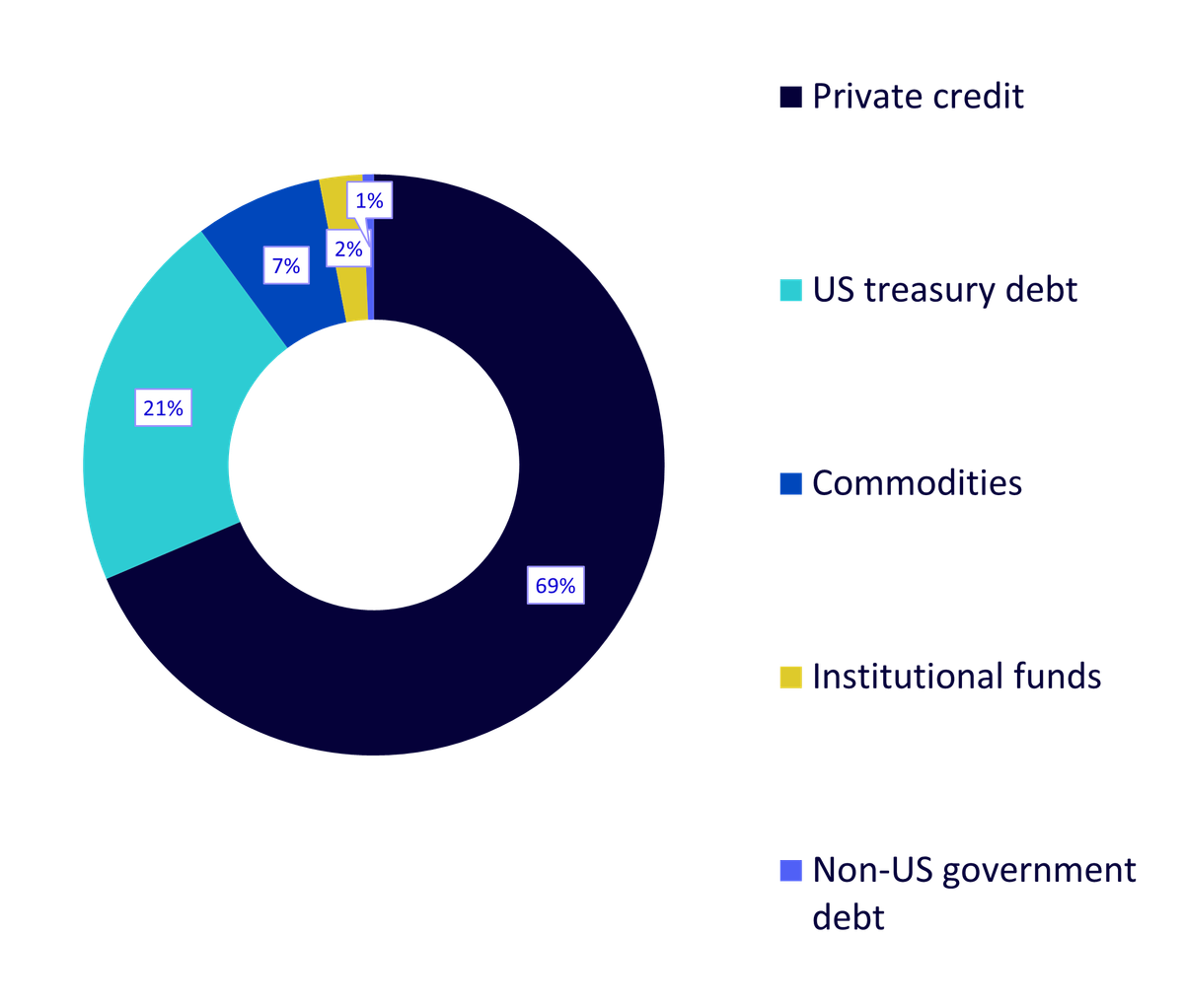
  • Tokenised RWAs: the ability to tokenise equities, bonds, and commodities across multiple blockchains is transforming traditional finance.

Figure 2: Tokenised RWAs – total value of $17 billion

17,-d-,02-crypto-2.png

Source: rwa.xyz, WisdomTree, 10 February 2025. Historical performance is not an indication of future performance and any investment may go down in value.

The road ahead: a multi-chain future is inevitable

Blockchain maximalism is a dying philosophy. The future belongs to networks that embrace collaboration over isolation. As interoperability solutions evolve, expect:

  • More secure and decentralised bridges that reduce the risk of exploits.
  • Increased institutional adoption as financial giants demand cross-chain infrastructure.
  • A shift towards multi-chain investment strategies, where investors allocate capital across multiple interconnected blockchains.

For investors and developers, we believe the message is clear: those who position themselves early in this multi-chain revolution may reap the greatest rewards. Interoperability is not just the future—it is happening now.

About the contributor

Dovile Silenskyte
Dovile Silenskyte

Director, Digital Assets Research

Dovile Silenskyte is a director of digital assets research at WisdomTree. Before joining WisdomTree in May 2024, Dovile worked as an index equity product strategist at BlackRock. Currently, she is responsible for conducting analyses for in-house digital assets publications and assisting the sales team with client queries about products and markets. Dovile holds an MSc in Finance from Texas A&M University – Commerce, and she is also a chartered financial analyst (CFA).

Best Workspaces - GPTW UK 2024
Best Workspaces for Development - GPTW UK 2024
Best Workspaces for Women - GPTW UK 2024
Best Workspaces in Financial Services & Insurance - GPTW UK 2024
Important Risk Information

Jurisdictions in the European Economic Area (“EEA”): This website and its content has been provided by WisdomTree Ireland Limited, which is authorised and regulated by the Central Bank of Ireland.


Jurisdictions outside of the EEA: This website and its content has been provided by WisdomTree UK Limited, which is authorised and regulated by the United Kingdom Financial Conduct Authority.

The price of any Shares or the value of an investment in ETPs may go up or down and an investor may not get back the amount invested. Past performance is not a reliable indicator of future performance. This material is not intended to be relied upon as a forecast, research or investment advice, and is not a recommendation, offer or solicitation to buy or sell any financial instrument or product or to adopt any investment strategy.

Please click here for our full disclaimer.

© 2026 WisdomTree, Inc. All Rights Reserved