
GBSE IM
WisdomTree Physical Gold - EUR Daily Hedged

Published 23 June 2026

Director, Digital Assets Research
Every day, approximately US $9.6 trillion changes hands in the foreign exchange (FX) market1. That is not a typo. US $9.6 trillion, not billion.
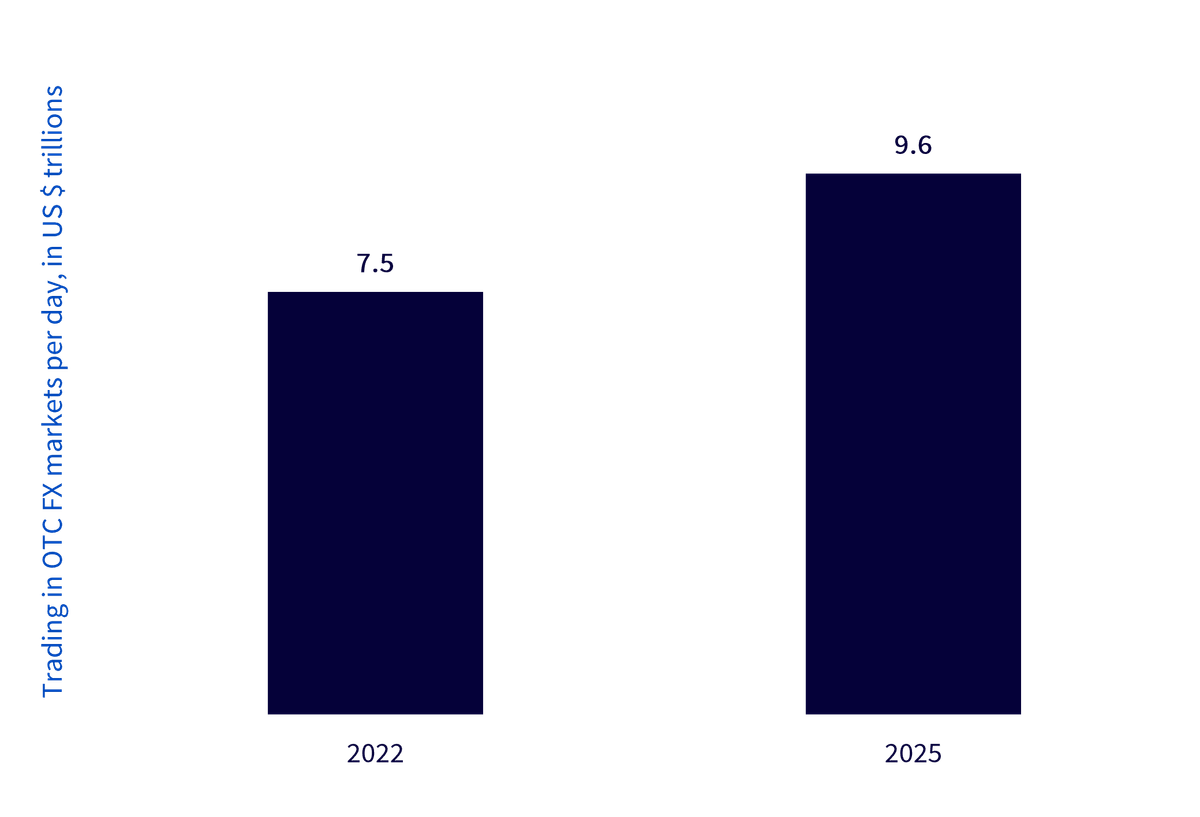
Source: Bank for International Settlements. Over-the-counter (OTC) foreign exchange turnover in April 2025. Historical performance is not an indication of future performance and any investments may go down in value.
To put that into perspective, the New York Stock Exchange typically sees daily trading volumes measured in tens of billions of US dollars. The FX market is approximately 100 times larger. Yet ask the average person what ‘forex’ is, and many will struggle to explain it.
So why does the world’s largest financial market receive so little attention?
The foreign exchange market, also known as forex or FX, is where currencies are bought and sold.
When a US company pays a supplier in Germany, US dollars must be exchanged for euros. When a British tourist visits Japan, pounds are converted into yen. When investors move money between countries, currencies are exchanged behind the scenes.
In short, almost every international transaction depends on the FX market.
Unlike stock markets, there is no central exchange. FX trading takes place electronically through a global network of banks, financial institutions, companies and investors. The market operates 24 hours a day, five days a week, moving from Asia to Europe to North America as trading follows the sun around the world.
Currencies are always traded in pairs. You are not simply buying one currency. You are buying it against another.
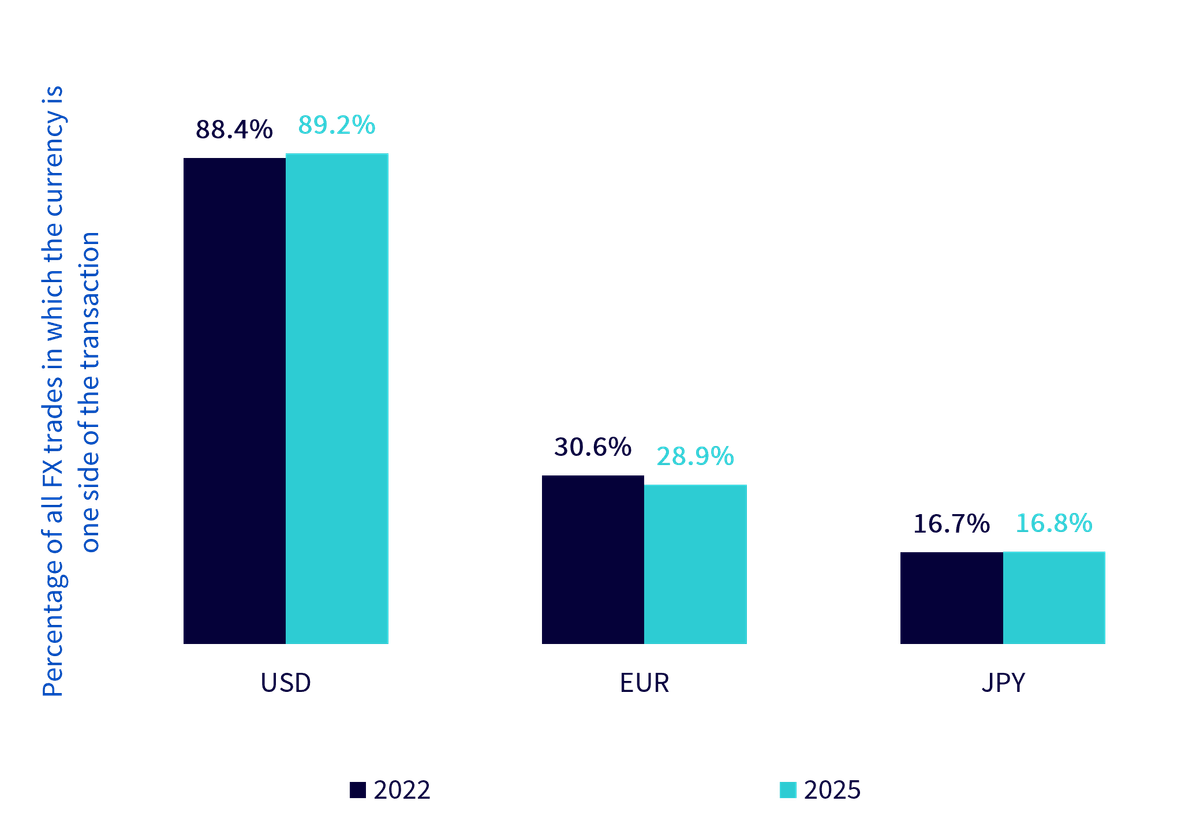
Source: Bank for International Settlements. OTC foreign exchange turnover in April 2025. Historical performance is not an indication of future performance and any investments may go down in value.
Some of the most traded currency pairs include:
Beyond these major currencies are emerging market currencies such as the Mexican peso, South African rand and Turkish lira, which can experience larger and more volatile price movements.
Currency values constantly change as investors react to economic and political developments. Several factors tend to have the biggest impact:
These factors rarely act in isolation. Currency markets reflect millions of decisions made by investors around the world, making them one of the most competitive and efficient markets in finance.
Most people will never place a forex trade. However, currency movements affect them more than they realise.
Exchange rates influence the cost of holidays abroad and imported goods. They also affect inflation by changing the price of goods purchased from overseas.
For investors, currency movements can have an even greater impact.
Consider a German investor who owns US shares. Even if those shares rise in value, a strengthening euro could reduce returns once profits are converted back into euro. Likewise, a weaker euro could boost returns from overseas investments.
In other words, when you invest internationally, you are often making two investments at the same time:
Many investors focus heavily on the first and overlook the second.
This is where currency hedged exchange-traded products (ETPs) can play an important role.
Currency hedging aims to reduce the impact of exchange rate fluctuations on investment returns. Rather than taking on both investment and currency risk, investors can opt to focus primarily on the performance of their chosen asset.
For example, a UK investor buying US equities may want exposure to the growth of American companies, but not necessarily exposure to movements in the US dollar. A currency hedged ETP can help separate those two sources of return.
This can be particularly valuable during periods when currency movements are large enough to dominate investment performance. This is because currency hedged ETPs provide investors with an additional tool to manage currency risk and align portfolios with their investment objectives.
Importantly, hedging is not always the right choice. Currency exposure can sometimes enhance returns and may provide diversification benefits. However, investors should make an active decision about whether they want currency exposure rather than accepting it unintentionally.
The foreign exchange market is the financial system’s hidden engine room. It processes the currency flows generated by international trade, investment and travel on a scale unmatched by any other market.
Understanding currencies provides valuable insight into inflation, interest rates, economic growth and global capital flows. It also helps investors better understand the risks embedded within international portfolios.
Whether you ever trade a currency pair or not, exchange rates are already influencing your finances and investments.
Investing in exchange-traded products involves risk, including possible loss of capital. Investments that provide international market exposure may be affected by movements in exchange rates. Currency hedging aims to reduce the impact of currency fluctuations but may not eliminate currency risk entirely and may reduce gains arising from favourable exchange-rate movements. Investors should consider the investment objectives, risks and costs of any product before investing.
1 Source: Bank for International Settlements. Global FX trading hits $9.6 trillion per day in April 2025 and OTC interest rate derivatives surge to $7.9 trillion: Triennial Survey.
2 Bank for International Settlements. OTC foreign exchange turnover in April 2025.

Director, Digital Assets Research
Dovile Silenskyte is a director of digital assets research at WisdomTree. Before joining WisdomTree in May 2024, Dovile worked as an index equity product strategist at BlackRock. Currently, she is responsible for conducting analyses for in-house digital assets publications and assisting the sales team with client queries about products and markets. Dovile holds an MSc in Finance from Texas A&M University – Commerce, and she is also a chartered financial analyst (CFA).
